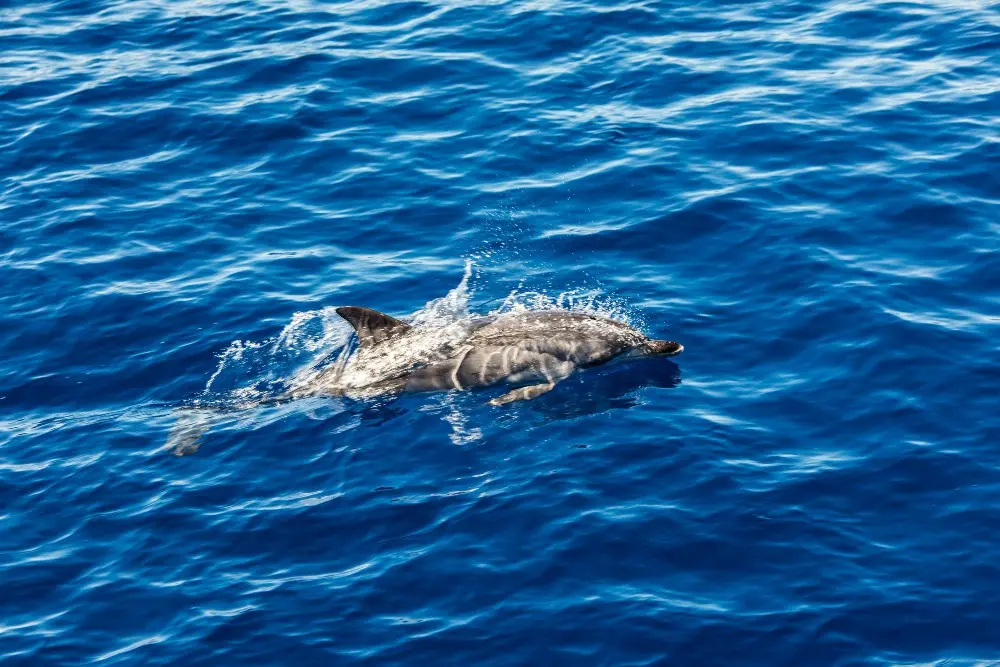
Dolphins appear regularly in Islamorada’s waters year-round, with the highest encounter rates occurring during early morning and late afternoon hours when these marine mammals actively feed in shallow coastal areas. Our sunset cruises and private charters position in prime dolphin habitat on the Gulf of America where bottlenose dolphins frequently surface, play, and sometimes bow-ride alongside boats.
Dolphin Species in Islamorada Waters
The Florida Keys host primarily bottlenose dolphins, the species most people recognize from aquariums and marine parks. Wild bottlenose dolphins in Islamorada waters behave very differently from captive animals, displaying natural hunting behaviors, complex social interactions, and genuine curiosity about boats and people.
These dolphins typically travel in pods ranging from 2-15 individuals, though larger aggregations sometimes form when food sources concentrate. Adult bottlenose dolphins reach 8-12 feet in length and weigh 300-600 pounds, making them substantial and impressive when they surface near your boat.
Atlantic Spotted Dolphins
Atlantic spotted dolphins occasionally visit Islamorada waters, particularly in deeper offshore areas. These smaller dolphins, identified by their distinctive spotted patterns, prefer open ocean habitat but sometimes come closer to shore when following fish schools.
Spotting this species happens less frequently than bottlenose encounters, but it’s an exciting bonus when it occurs during our boat tours.
Best Times to See Dolphins
Timing significantly impacts your dolphin encounter probability. Understanding dolphin behavior patterns helps set appropriate expectations.
Daily Activity Patterns
Dolphins feed most actively during early morning (around sunrise) and late afternoon (approaching sunset). These peak feeding times coincide with when small fish species move into shallow water, creating opportunities for dolphins to hunt efficiently.
Our sunset cruises depart during the late afternoon feeding window, providing excellent dolphin viewing opportunities as we position for the sunset. The golden hour light also creates stunning photography conditions when dolphins surface.
Seasonal Variations
Dolphins remain in Islamorada year-round, though you might see larger pods during certain seasons. Summer months often bring more dolphin activity as fish populations increase and marine life generally becomes more abundant.
Winter sees slightly fewer dolphin sightings but still offers regular encounters. The slightly cooler water temperatures concentrate dolphins in specific areas, and experienced captains like Captain Matt know where to look based on seasonal patterns.
Weather and Tide Influences
Calm weather produces better dolphin viewing conditions because you can spot their dorsal fins and splashes from farther away. Choppy water makes it harder to detect dolphin activity at a distance.
Tides influence where dolphins hunt. Some locations produce better sightings on incoming tides when baitfish move into shallow areas, while other spots work better during outgoing tides. Captain Matt’s nearly 30 years of local experience helps him position the boat where dolphin encounters are most likely based on current conditions.
Where Dolphins Appear in Islamorada
Dolphins frequent specific areas around Islamorada based on habitat characteristics and food availability.
Gulf of America (Bayside) Waters
The Gulf of America side of Islamorada provides prime dolphin habitat. Shallow flats, channels, and drop-offs create ideal conditions for dolphins to hunt mullet, pinfish, and other species. Our sunset cruises specifically position in these productive waters.
Dolphins often hunt along the edges of channels where water depth changes rapidly. They use their echolocation to locate fish schools in murky water and coordinate group hunting behaviors that trap prey.
Atlantic Ocean (Reef Side)
Dolphins appear less frequently near the reef sites we visit during snorkeling tours, though occasional encounters happen. The deeper offshore reefs provide less ideal hunting habitat for bottlenose dolphins compared to the shallow bayside flats.
When dolphins do appear at reef locations, they’re often traveling between feeding areas rather than actively hunting. These encounters still thrill snorkelers who spot fins cutting through the surface while they’re in the water.
Sandbar Areas
Dolphins sometimes pass through the sandbar locations we visit on our combo tours. The shallow water attracts small fish, which in turn attracts dolphins hunting them. Seeing dolphins while you’re standing in waist-deep water at a sandbar creates magical moments.
Dolphin Behaviors You Might Observe
Understanding common dolphin behaviors helps you appreciate what you’re witnessing when encounters occur.
Bow-Riding
Dolphins sometimes swim directly in front of moving boats, surfing the pressure wave created by the bow. This behavior appears playful, with dolphins positioning themselves to ride the wave with minimal effort while occasionally leaping partially out of the water.
Bow-riding typically happens when we’re underway between locations. The dolphins seem to enjoy the activity, often staying with the boat for several minutes before veering off to continue their own activities.
Feeding Behaviors
When dolphins are actively feeding, you’ll see them working together in coordinated patterns. They might circle a school of fish to trap them against the surface, or they might take turns driving through the concentrated prey.
Feeding activity often involves more splashing and energetic movement than traveling behavior. Birds diving into the same area usually indicate active feeding, as seabirds capitalize on fish driven to the surface by dolphins below.
Social Interactions
Dolphins are highly social animals, and you might observe them swimming in close physical contact, slapping their tails on the water surface, or leaping completely clear of the water. These behaviors serve various purposes including communication, play, and possibly removing parasites.
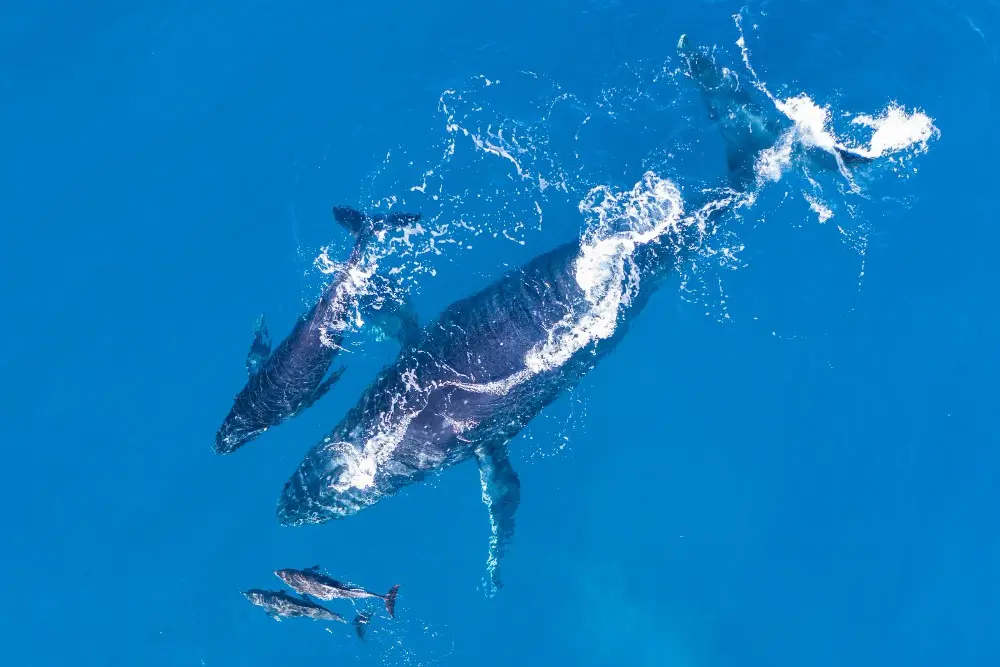
Mother dolphins with young calves stay particularly close together, with the calf often swimming directly beside or slightly behind the mother. Watching these family groups provides insight into dolphin social structure.
Photography Tips for Dolphin Encounters
Capturing photos of wild dolphins requires quick reflexes and some understanding of their behavior patterns.
Camera Settings and Equipment
Use the fastest shutter speed your camera allows to freeze dolphin movement. A sport or action mode works well if your camera has preset modes. Keep your camera ready and pointed in the general direction where dolphins last surfaced.
Dolphins surface to breathe every 20-30 seconds when actively swimming, creating rhythmic patterns you can anticipate. Watch for a few surfacing cycles to predict where the dolphin might appear next.
Smartphone Photography
Modern smartphones capture decent dolphin photos if you’re ready when the moment happens. Keep your phone in photo mode rather than having to unlock and open the camera app when dolphins appear.
Burst mode increases your chances of capturing the perfect moment. Take many photos in rapid succession rather than trying to time a single perfect shot.
Which Tours Offer Best Dolphin Opportunities
Different tours provide varying dolphin encounter probabilities based on where we travel and when we depart.
Sunset Cruises for Maximum Dolphin Time
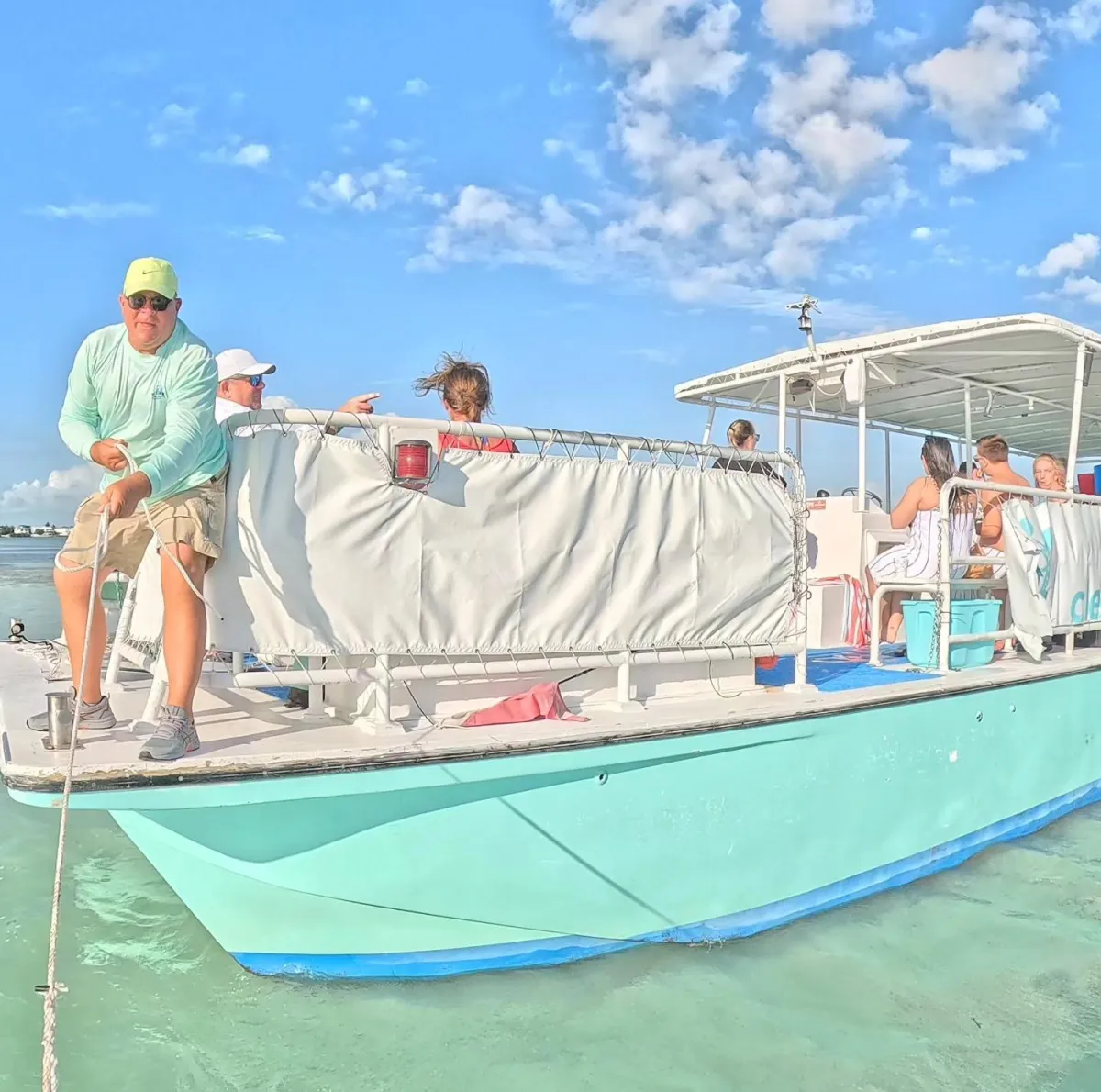
Our 1.5-hour sunset cruises offer the highest probability of dolphin encounters. We position specifically in Gulf of America waters where dolphins regularly feed during late afternoon, and the entire cruise focuses on wildlife viewing and sunset appreciation.
The relaxed pace and dedicated time in dolphin habitat means we can linger in areas where activity occurs, rather than rushing to reach snorkeling destinations.
Private Charters Offer Flexibility
Private charters can be customized specifically around dolphin viewing if that’s your primary interest. We can time departure during peak feeding windows and position in locations where recent dolphin activity has been observed.
The flexibility to adjust timing and routing based on where dolphins are active that day gives private charters an advantage for dedicated dolphin enthusiasts.
Combo Tours Offer Bonus Opportunities
While our snorkeling and sandbar combo tours focus primarily on underwater experiences and sandbar relaxation, dolphin encounters happen regularly during transit between locations. These bonus sightings add excitement to an already diverse experience.
Dolphin Watching Ethics and Regulations
Responsible dolphin watching follows specific guidelines that protect these marine mammals while allowing meaningful encounters.
Marine Mammal Protection Act Requirements
Federal law prohibits harassing, feeding, or attempting to touch wild dolphins. Boats must maintain at least 50 yards distance from dolphins unless the dolphins approach on their own. We never chase dolphins or alter course to intercept them deliberately.
When dolphins choose to approach and bow-ride, that’s their decision and we allow it. We never pursue dolphins that are clearly avoiding the boat or appear to be resting.
Responsible Viewing Practices
Captain Matt maintains appropriate speeds and distances that allow dolphins to interact on their terms. Slow, steady boat operation near dolphins prevents startling them and allows natural behaviors to continue.
We never disrupt feeding activity, separate mothers from calves, or create situations where dolphins feel cornered or stressed. Nearly 15 years of experience means we know how to share the water respectfully with marine life.
Other Marine Life You Might See
Dolphin watching often includes encounters with other Florida Keys marine species that share their habitat.
Sea Turtles
Sea turtles surface to breathe in the same areas where dolphins hunt, though turtles move much more slowly. Seeing both dolphins and turtles during a single sunset cruise happens regularly.
Rays and Sharks
Large rays often glide near the surface during late afternoon, and you might spot their distinctive diamond shapes moving through shallow water. Small sharks occasionally surface briefly, though they’re far less common than dolphin sightings.
Seabirds
Pelicans, cormorants, herons, and various gull species populate the same waters as dolphins. Large seabird concentrations often indicate feeding activity that attracts both birds and dolphins to the same locations.
Setting Realistic Expectations
While dolphin encounters happen frequently, we can never guarantee sightings on any specific trip. Wild dolphins move freely and don’t operate on schedules that accommodate tour itineraries.
What “Regular Sightings” Means
We see dolphins on most sunset cruises, particularly during peak seasons and optimal conditions. But “most” doesn’t mean “every single time.” Some trips yield extended dolphin encounters with multiple pods, while others involve brief sightings, and occasionally we see no dolphins at all.
This unpredictability is part of wildlife watching. The sightings mean more because they involve wild animals choosing to be where we are, not captive animals performing on command.
Making the Most of Your Experience
Come with open expectations and appreciation for whatever wildlife encounters occur. The Islamorada sunset, beautiful waters, and peaceful time on the Gulf of America create worthwhile experiences regardless of specific dolphin activity.
Book Your Dolphin Watching Adventure
Ready to search for dolphins in Islamorada’s beautiful waters? Our sunset cruises provide the best opportunities for encounters, while private charters offer maximum flexibility for dedicated dolphin enthusiasts.
Questions about dolphin viewing opportunities? Call us at (305) 413-8307 or check our FAQ page. Captain Matt’s local knowledge and decades of experience position you for the best possible chance of memorable dolphin encounters.
Book your tour today and discover why Islamorada’s waters provide some of the Florida Keys’ best opportunities for observing wild dolphins in their natural habitat.